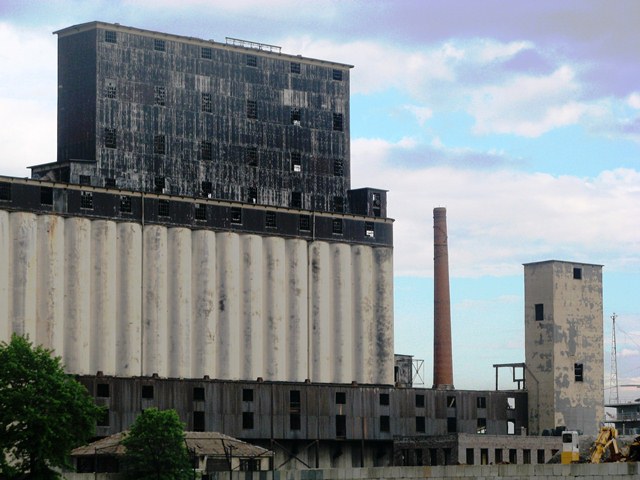
Derelict factory: Testament to ruin
 Etched in the skyline
 Layers of history
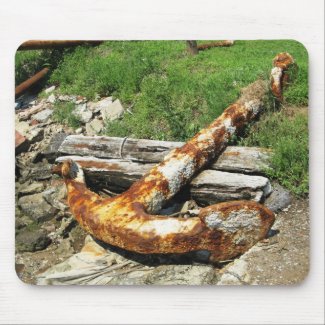
Red Hook is permeated by a ghostly aura—the spirit of industry. Decades of productive energies linger there with a heavy but elusive presence, like something far-off and epic. Relics from Brooklyn’s industrial prime are visible everywhere: derelict factories—cratered, garbage cramming their rusted lesions; cobblestones and trolley tracks peeking up through spots of worn asphalt; faded letters on buildings announcing long extinct companies—layers of time etched into the skyline.
The landscape of working factories and copious decay intermingled heightens the aura. There’s an intimacy at street-level, an immersion of the senses. Passing through industry’s vestiges, the environment expands. The soundscape grows more distinct, especially on warm days . . . the exuberant sounds of hammering, sawing, humming motors pour out from open doors, trailing you down the street . . . glow of a torch in a factory window a half-block away.
 Phantoms of industry
The smell of petroleum by-products signals your entrance into the southeastern corner of Red Hook—the Industrial Zone. Steel, brick and concrete hold sway here, surrounding you with a monolithic palette of black/red/gray, as if all of sudden you’re in the bowels of the city. Elemental. You feel it in your gut. There’s a strangeness that engulfs you.
 Thunderhead smokestack
The urge to produce or create is part of our genetic memory—a deep-rooted tendency, encoded in our DNA over time. Underlying all that is manmade—every plastic trinket that rolls off an assembly line, every painting, pop song, and opera—is the imperative to create. This is the true “meaning of life,” in all its primal, amorphous power. The industrial zone, out in the open, monolithic in scale, embodies this instinct.
 On the waterfront
Brooklyn was once the fourth largest industrial center in the U.S, after World War II, employing about 600,000 people in manufacturing jobs. Today it’s less than a tenth of that number. Still, industry lives in Brooklyn. Any weekday stroll through Red Hook or Gowanus or Greenpoint confirms that artisans, tradesmen, and laborers remain in force.
Inevitably, though, in all such quarters, the artists come. They see possibilities where others see only squalor and oblivion. Artists are the vanguard of gentrification. In their wake come the galleries, boutiques, and bistros, signaling a new horizon, a decade or less in the future, when most of the borough will not exist in its present form.
 Vintage decay
The specter of industry will always linger in former hotbeds of production, ensuring a legacy to build on, expanding Brooklyn’s uncanny interchange between past, present, and future.
SLIDESHOW – Industrial Brooklyn (Flickr)


 Official Plumb Beach: A shuttered rest stop (click for Plumb Beach history)
 Sewage treatment plant on Knapp St.
  “Ever Vigilant in Protecting Nature’s Precious Resource. Through Applied Technology We are Purifying our Water.”
  Marina on Plumb Beach Channel, Gerritsen Beach


 Gerritsen Beach
  Houses on Plumb Beach Channel
 Condos on Emmons Ave., Sheepshead Bay

 Gulls trail a pleasure craft motoring through Sheepshead Bay
 Neighbors: Derelict backyard of motel next to beach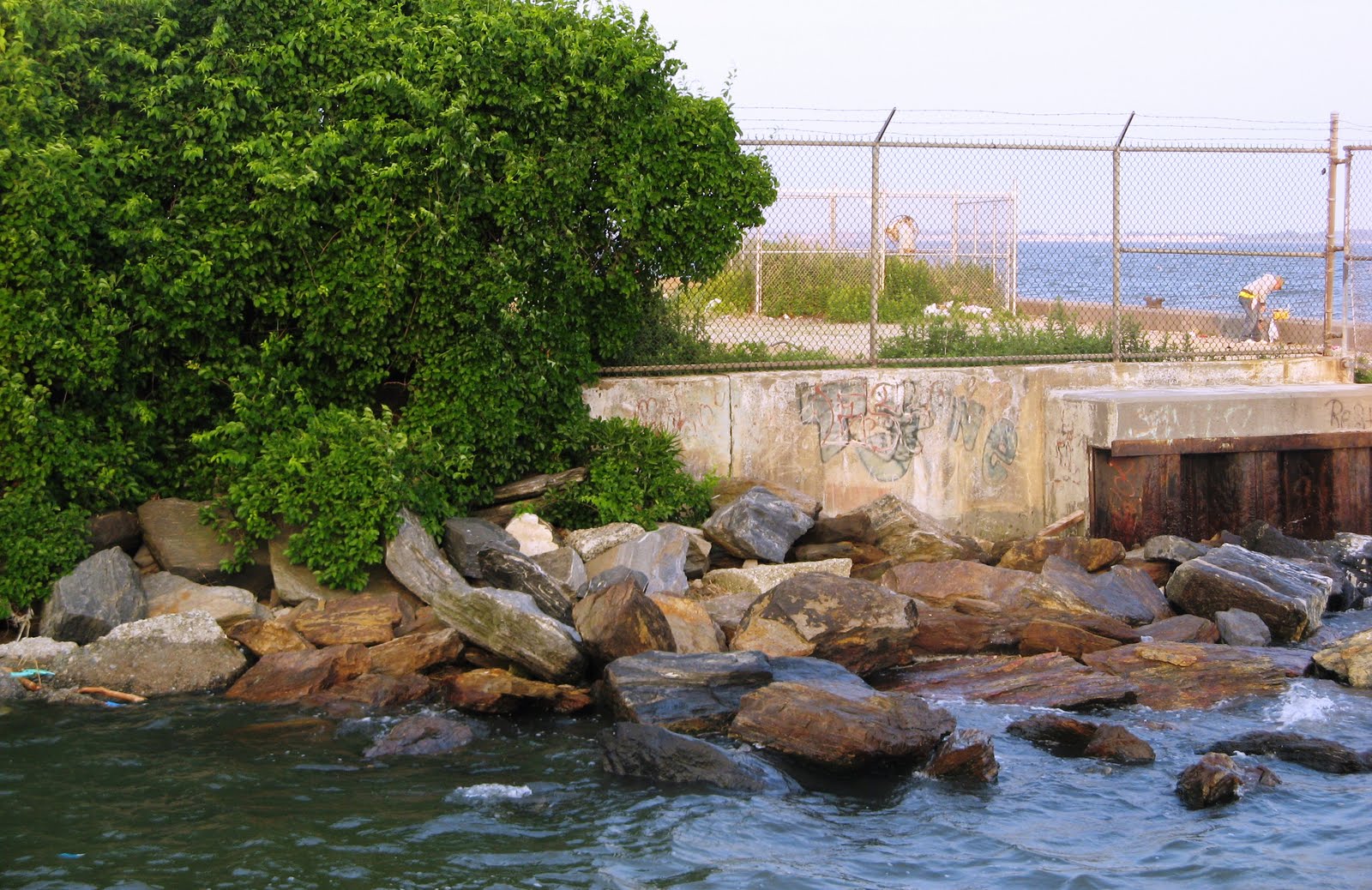

 Unofficial entrance to the beach (Kingsborough College lighthouse in background)

 Sunset: Assisted Living Facilities surround the wasteland where Plumb Beach meets Sheepshead Bay


.jpg)
.jpg)
.jpg)
.jpg)
.jpg)
.jpg)
.jpg)
.jpg)


.jpg)
.jpg)
.jpg)
.jpg)
.jpg)